
Immigration and visas · India
Canadian CAIPS / GCMS notes retrieval webapp with payment and tracking
Webapp for Canadian-visa applicants who need CAIPS / GCMS notes pulled. Tiered packages, intake form, payment gateway, order tracking.
Built for CAIPS Notes ApplyVisit the live siteAll work
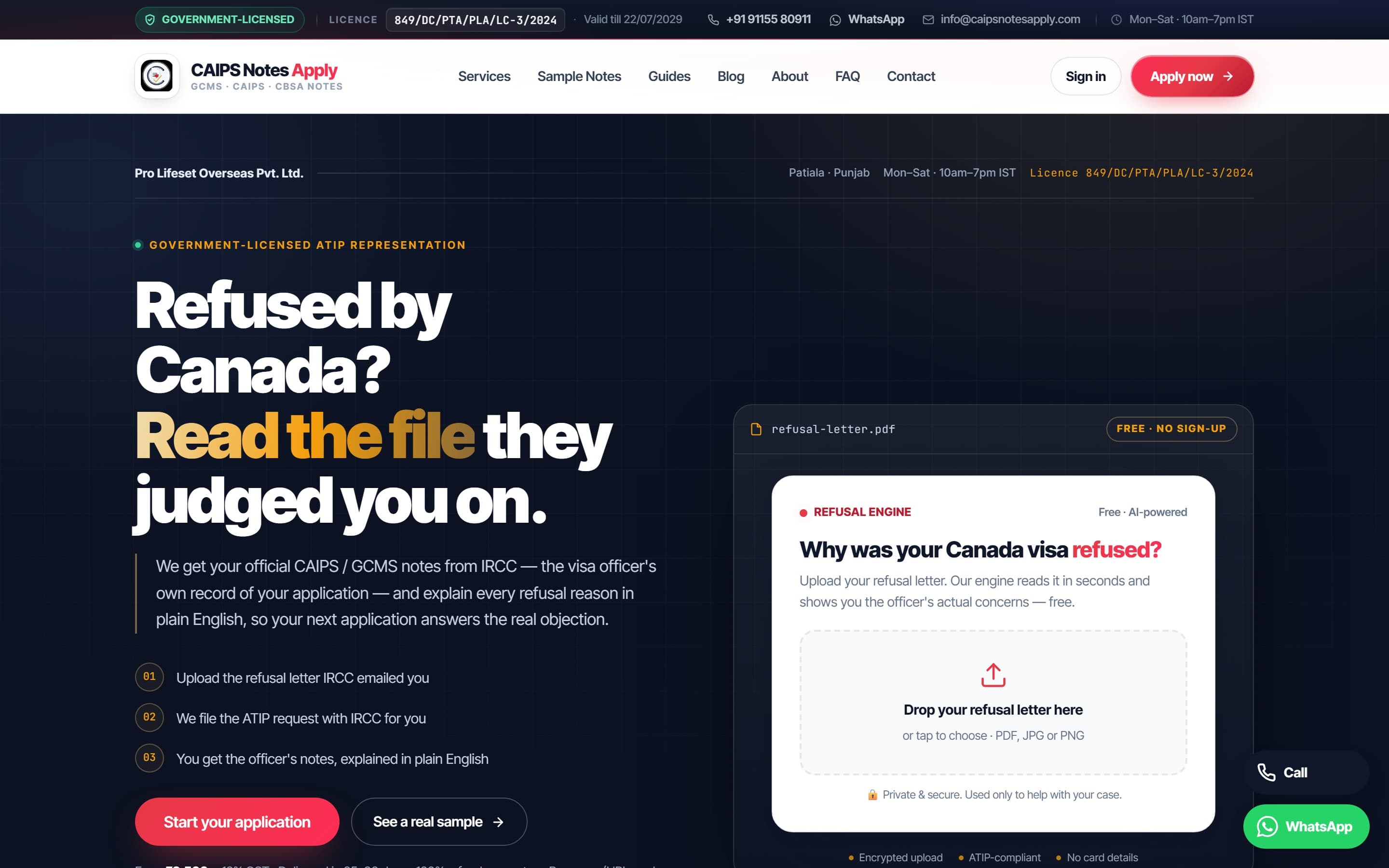
Results
[ 01 ]The problem
The refusal letter says nothing. The officer's notes say everything.
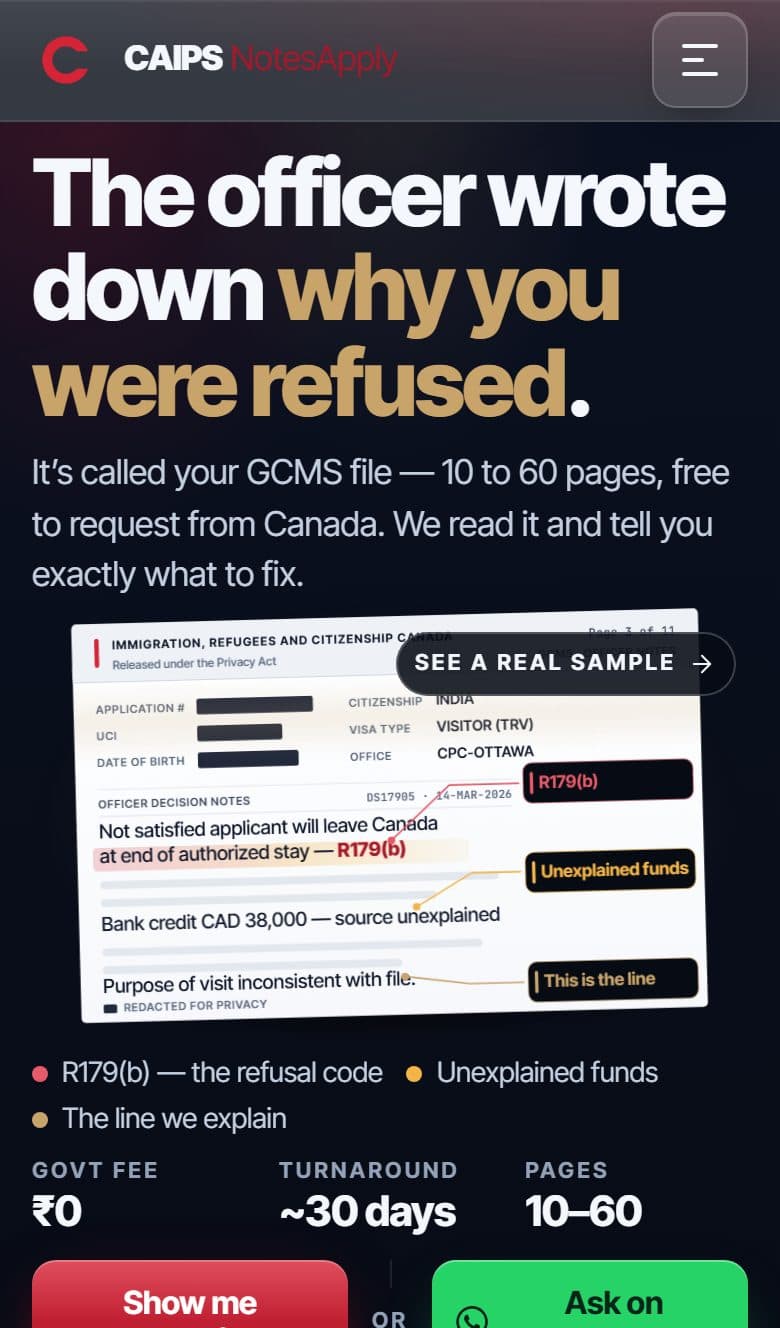
A Canadian visa refusal arrives as one page of tick-boxes. The real reasons sit in the officer's GCMS notes, a 10 to 60 page file the applicant can request for free but almost nobody knows how to read. Consultants were spending hours per client explaining codes like R179(b), and applicants were re-applying blind.
Who is on the other side
Refused and waiting applicants, mostly in India, and the licensed consultancy that reads their files.
[ 02 ]Old way, new way
What changed, in one table.
Getting the file
Through an agent, often the paid route
Free Privacy Act request, guided step by step
Reading it
10 to 60 pages, by hand, per client
Every code decoded in plain English, free
The diagnosis
A phone call nobody writes down
Written, then checked by a person and an expert system
What next
Re-apply to Canada from memory
Canada or Europe, chosen with the file in hand
[ 03 ]The same task, twice
Before, and after.
Before
A refusal, handled by hand
Day 0
Refusal letter arrives. Applicant searches forums for what the tick-box means.
Day 1· the snag
Finds an agent. Agent asks for the notes; applicant does not know how to request them.
Day 2
Agent files the ATIP request on the applicant's behalf, often through the paid route.
Day 30· the snag
Notes arrive as a PDF full of codes. Agent reads all 10 to 60 pages by hand.
Day 32
A phone call explains the findings. Nothing is written down for the next application.
Day 40· the snag
Re-application prepared from memory of that call.
Weeks of waiting, a paid request that should have been free, and a diagnosis that lives in one person's head.
After
The same refusal, on caipsnotesapply.com
Min 0
Applicant picks their moment: refused, still waiting, or notes already in hand.
Min 2· automatic
Step-by-step guide to the free Privacy Act request, with Canada's own page shown as proof.
Min 5· automatic
Tracking number saved. Applicant knows the file lands in about 30 days.
Day 30· automatic
Notes uploaded. Codes decoded free, line by line, in plain English.
Day 30
Refusal grounds matched against the published checklist the firm files by.
Day 31
Licensed consultant reviews the file and the expert system re-checks it before anything is sent.
The request is free, the decoding is instant, and the next application is built from a written diagnosis.
[ 04 ]Who does what, stage by stage.
How a refusal becomes a filed application
Three doors in, one review out. Read across for the stages, down for who does each step.
1 · Arrive
Refused, waiting, or notes in hand
Three entry points, one per situation
Customer
2 · Get the file
Guided ATIP request
Privacy Act route, free, foreign national outside Canada
The system
Applicant files it
Passport scan, tracking number saved
Customer
3 · Decode
Codes explained free
R179(b), unexplained funds, purpose of visit, ties
The system
Expert system re-checks
Built by Redenn Informatics Inc.
AI
4 · Prepare
Licensed consultant reviews
Government-licensed consultancy
A person
Grounds checklist
Same refusal grounds published on the site
The system
5 · File
Application filed
Nothing leaves on one person's reading
A person
Europe considered
A Canadian refusal does not bind Germany, Ireland or the Netherlands
The system
[ 05 ]The real thing
Captured from the live site today, not a mock-up.
 1
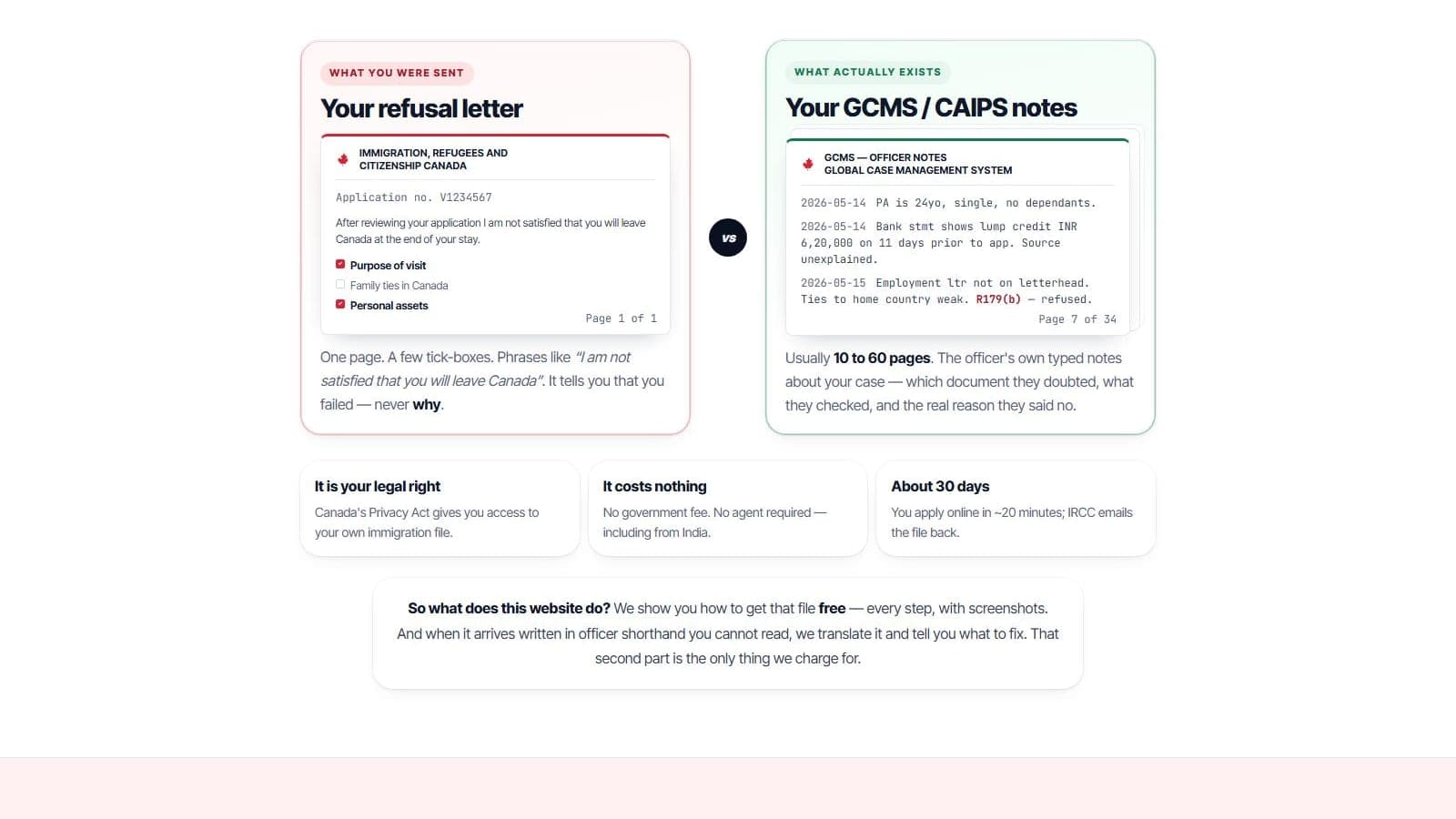
1Letter versus notes
The one-page refusal letter and the officer's GCMS notes, side by side. This is the whole argument of the site in one picture: what you were sent, and what actually exists.
 2
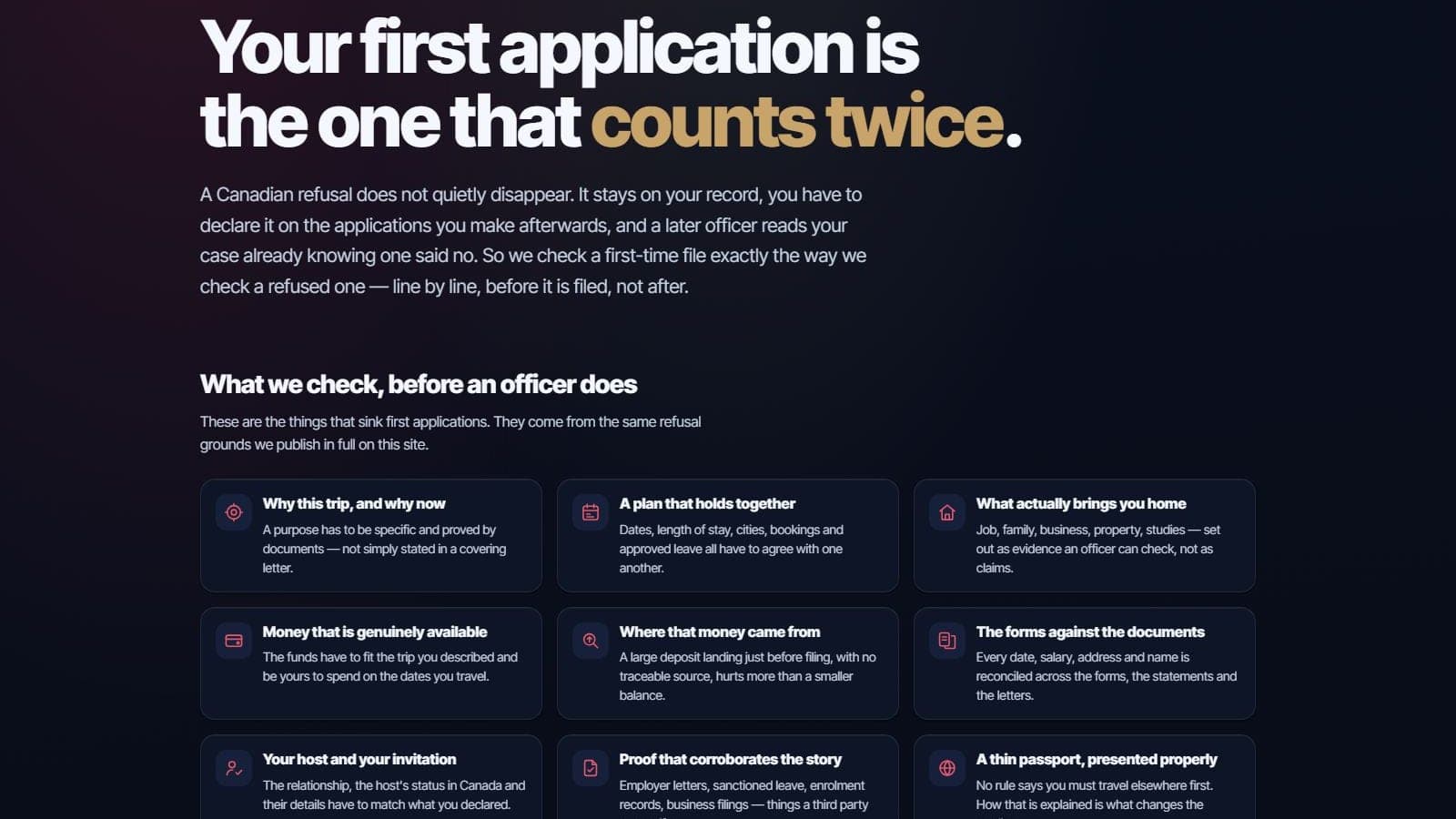
2What is checked before an officer does
Ten refusal grounds, published in full. A first-time file is read against the same list a refused one is.
 3
3Before it is filed
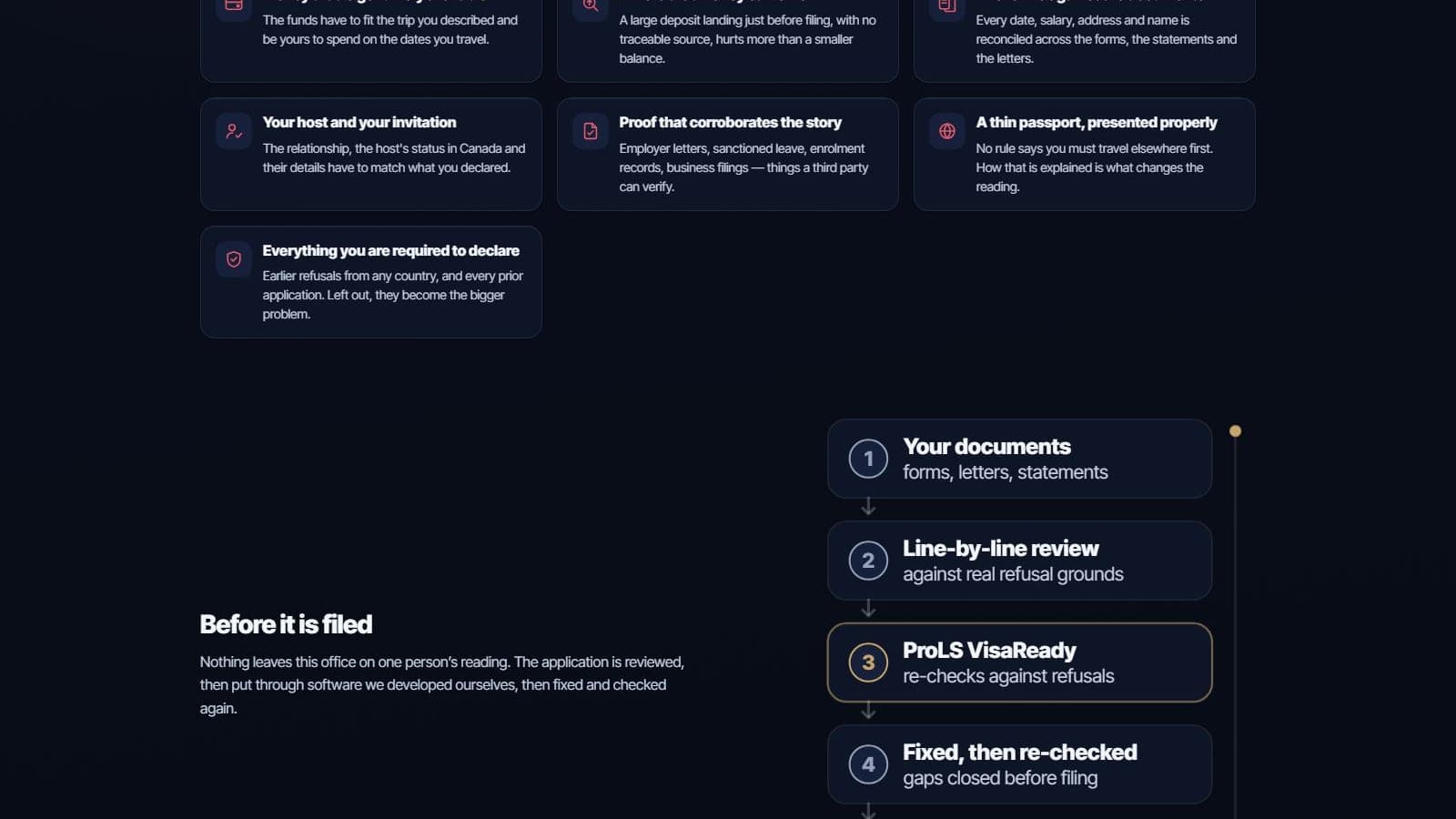
Documents, line-by-line review, the expert system pass, fixes, then a second check. Drawn on the client's site as a pipeline, because that is what it is.
[ 06 ]What changed
The numbers we can point to.
- 10–60
- pages in a GCMS file, read for the applicant
- ₹0
- government fee on the Privacy Act route
- ~30 days
- from request to notes in the inbox
- 3
- entry points, one per applicant situation
Stated on the homepage
Homepage
ATIP guide on the site
Homepage
[ 07 ]Work removed
What a person no longer does.
- Explaining the ATIP form on the phone, one applicant at a time
- Reading every code aloud from a 60-page PDF
- Re-typing the diagnosis into the next application
- Answering 'can I still go somewhere else?' from scratch
[ 08 ]Built with
- Next.js
- Supabase
- Online payments
- Cloudflare Turnstile
- Expert system by Redenn
More like this
All work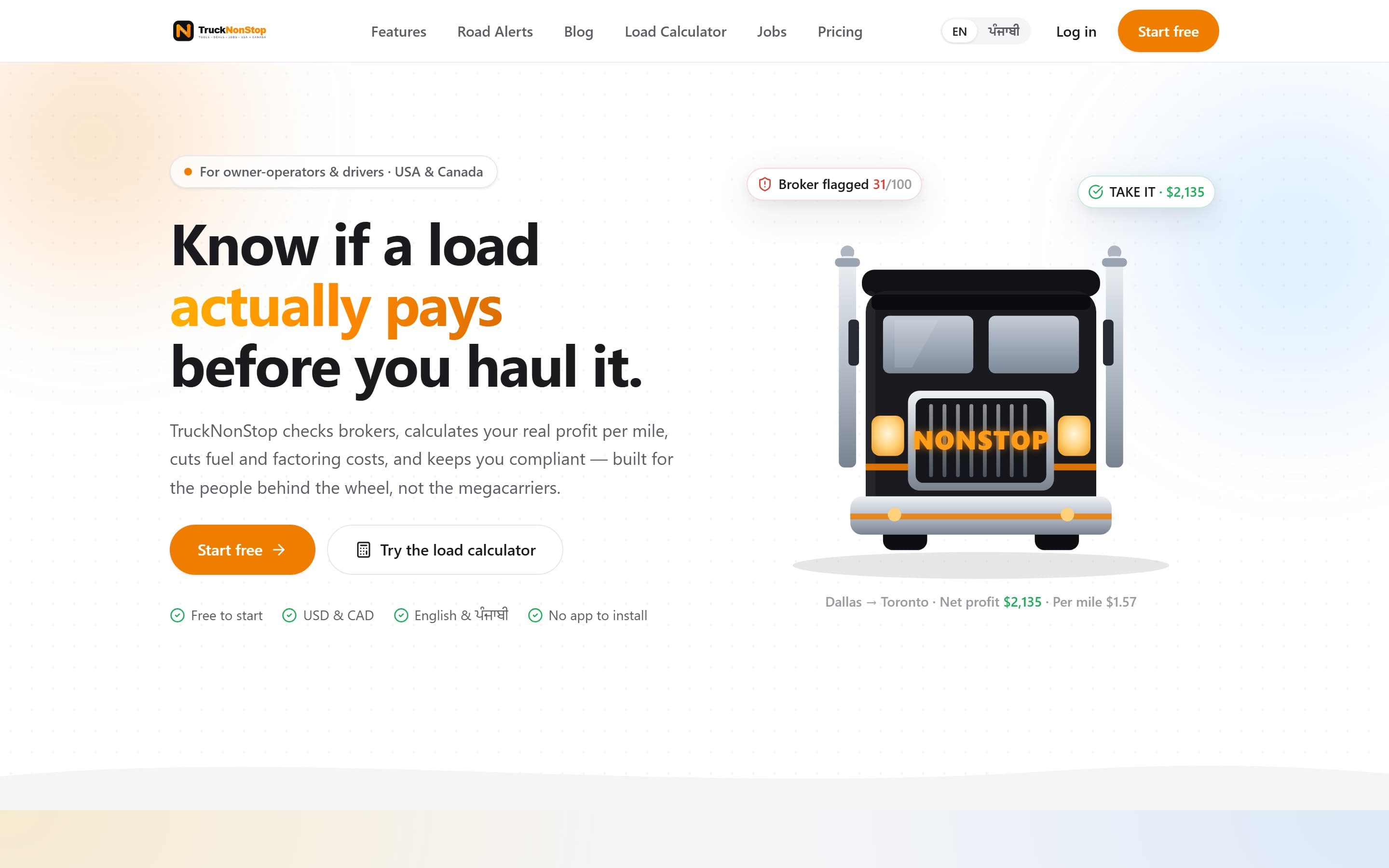
Trucking ops webapp — load profit calculator, broker verification, compliance tracker
TruckNonStop

Visa consultancy webapp — eligibility quiz, fee calculator, document portal
SureshotVisa (Pro Lifeset Overseas Pvt Ltd)
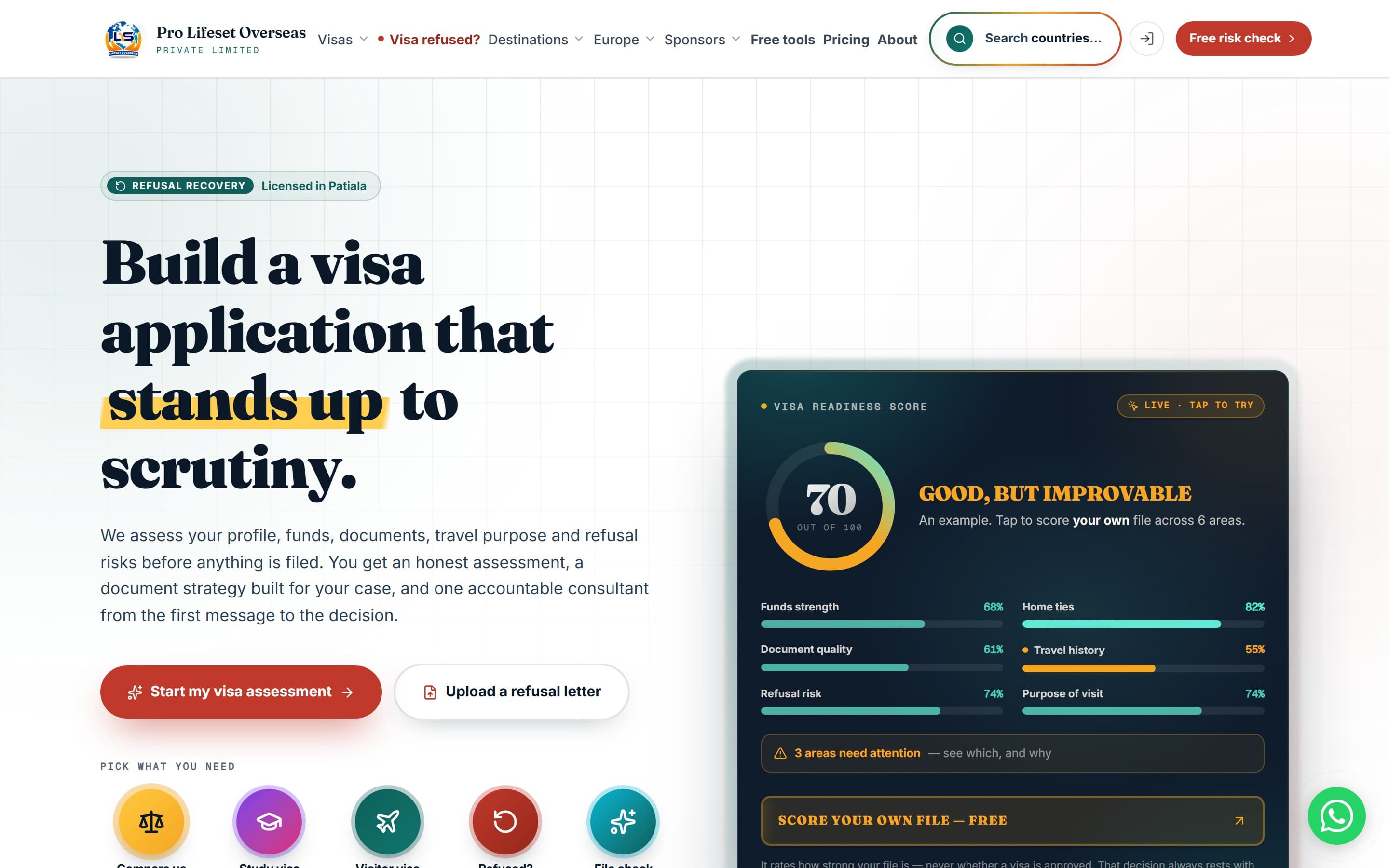
PTA-licensed immigration consultancy with client portal + 8-country playbook
Lifeset Overseas
Want one of these for your business?
Tell us what you need. You get a fixed price and a ship date back — no scope creep, no hourly rates.
We reply within 4 business hours.