




TruckNonStop
Tools that tell owner-operators whether a load actually pays
Get time back · Kept running
Hosting, deploys and monitoring set up so releases are routine and problems are caught early.
Cloud and DevOps on Vercel, AWS and Supabase: CI/CD, preview environments per pull request, monitoring, tested restores, zero downtime deploys.
Infrastructure is invisible right up until the morning it is the only thing anyone can talk about. The deploy that took checkout down for forty minutes. The backup that existed but had never once been restored. The environment variable a contractor set two years ago that nobody else has.
None of that is bad luck. It is what happens when infrastructure grows by accident, with nobody responsible for the shape of the whole. We build the other kind: hosting, pipelines and monitoring designed on purpose, documented, and handed over with the keys.
Every pull request gets a real environment. Not a screenshot, not a local demo. A live URL running that exact branch against seeded data, so stakeholders review the real thing before it merges and production stops being where surprises get discovered.
Deploys are immutable, so rollback is a click. Each build is a separate artefact, not an in place overwrite. A normal deploy swaps in the new build without taking the site offline, and reverting means promoting the previous build instead of hunting for what changed under pressure. Database migrations are gated and reversible, because that is the part a rollback cannot save you from.
Backups are only real once you have restored one. Anyone can switch on nightly snapshots. We run a restore into a scratch environment, time it, and write down what your recovery point and recovery time genuinely are. A drill is a better place to learn that than 2 AM.
Most businesses are better served by managed platforms than by a Kubernetes cluster they will end up renting a specialist to babysit, and we say so rather than sell the bigger diagram.
Two shapes these engagements usually take.
A hardening pass on a live system. The business is running, but deploys are manual, one person holds every credential and nobody has tested a restore. We build the pipeline, add preview environments, wire monitoring, move secrets into proper storage, cut access to least privilege, run a restore drill, and finish with a cost review and runbooks.
Infrastructure for a new build. Environments, pipelines, monitoring and backups designed alongside a new site or product, usually next to our Next.js and webapps work, so the first production deploy is routine rather than an event. Ongoing operations can fold into a Care Plan.
Cloud and DevOps work is scoped per project. A pipeline for one application and a multi environment rebuild with disaster recovery targets are not the same job, so we quote after a short call rather than from a table. Contact us with what you run today, or send a URL through the free audit.
Tools that tell owner-operators whether a load actually pays
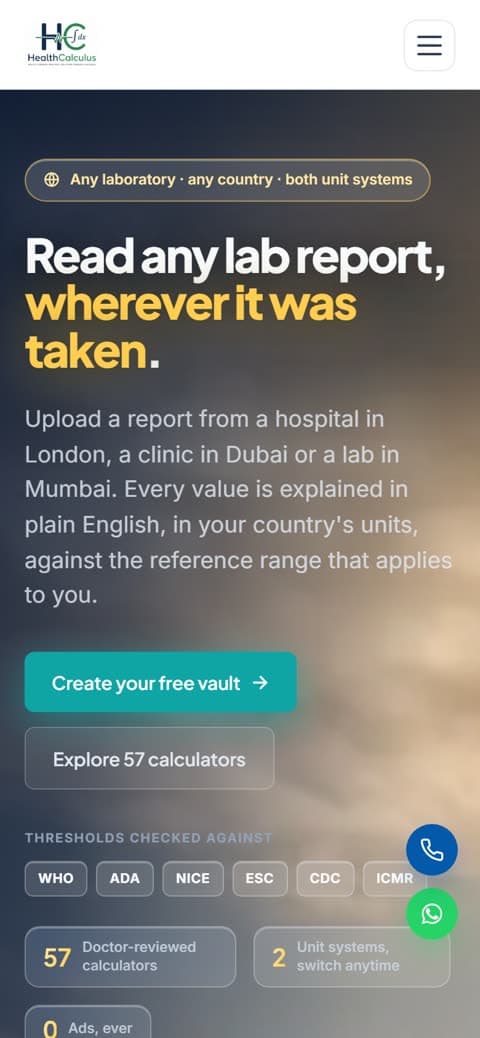
A family health portal that reads lab reports in plain language
We also build and run four platforms for our own group, Pro Lifeset: SureshotVisa, Lifeset Overseas, CAIPS Notes Apply, SureshotTravel.
Share infrastructure access, deployment documentation and recent incidents. Agree which services are included, who responds to alerts and what recovery needs to achieve.
Check whether a deployment can be verified and a failed change recovered. Hosting capacity alone is not an operations plan.
A few lines on the form, or ask the assistant. A person replies within 4 business hours.
What to fix first and why, what we'd build and run, the price and the go-live date, in writing within two business days.
A website takes 2 to 6 weeks, a web app 8 to 16. Tested on real phones before launch.
Hosting, updates and the systems kept working. Monthly plans cancel any time.
You own everything.
Your code, your domain, your accounts and your data.
One contract, your currency.
You sign with Redenn Informatics Pvt. Ltd. (India) and are invoiced in your own currency. North American work is led from our Brampton, Ontario office (Redenn Informatics Inc.).
Tested on real phones.
Built mobile-first, load time measured before launch, designed to WCAG 2.1 AA.
Prices published.
Websites from $1,200, web apps from $15,000, monthly systems $149 to $249/mo plus setup from $500, and care from $49/mo.
Quoted and invoiced in your own currency by Redenn Informatics Pvt. Ltd. (India); pay by card through Razorpay or by bank transfer.
It is scoped per project rather than priced from a menu, because the range is genuinely wide: hardening an app that already runs on Vercel and Supabase is a different job from standing up pipelines, monitoring, backups and security for a brand-new build. What drives the quote is the size of your infrastructure, how many environments and services are involved, and how much of the checklist you need, from CI/CD and preview environments through to runbooks. Whatever the scope, you get one fixed price agreed in writing before work starts, so the bill cannot grow mid-project.
Hosting that works is not the same as infrastructure you can trust under pressure. This work adds the layer most small teams skip: a CI/CD pipeline that type-checks, lints and tests every change before it ships, a preview environment for every pull request with seeded data, uptime checks and error tracking with alerts routed to a person who is actually on, backups whose restores have been rehearsed rather than assumed, and secrets taken out of code and chat onto a rotation schedule. You discover its value the first time something fails and the recovery is boring instead of a crisis.
No. Production deploys are zero downtime: the new version is built and verified before traffic moves to it, so customers never see a maintenance page. If a release turns out to be bad anyway, rollback is one click back to the previous version rather than a frantic late-night rebuild. Risk is also pulled forward, because every pull request gets its own preview environment with realistic seeded data and automatic teardown, meaning changes get exercised somewhere safe long before they go anywhere near production.
A person replies within 4 business hours. Your written growth plan follows within two business days.
Or call +1 437 524 3001 or toll-free +1 888 905 4003, or email hello@redenn.com.