

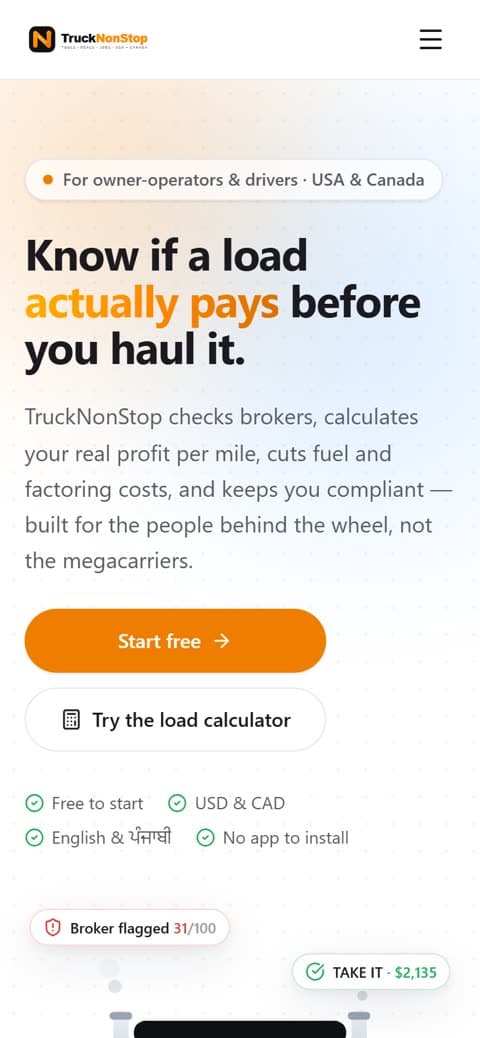

TruckNonStop
Tools that tell owner-operators whether a load actually pays
Get time back · AI that does the work
AI built into a real business task, with the checks, the costs and the decisions for a person planned in.
Your clinic, after hours
AI assistant · 10:42 PM
Custom AI built into real products — feature integration, workflow automation, model evaluation, production monitoring. Engineered like a webapp, not a widget.
Too often, "AI development" means one thing: a third-party chat widget dropped into the corner of your site, an invoice for "AI integration", and a handover email. Six months later the widget is answering questions about your refund policy incorrectly, nobody can tell you what it costs to run per month, and the workflow that actually deserved automating — the intake triage, the quote drafting, the report that eats someone's Friday — is still done by hand.
We treat AI as an engineering discipline, not an add-on. The same standards that apply to our webapps — typed code, measured performance, boring reliability — apply to every AI system we ship. And we run our own: the AI chatbot answering visitors on redenn.com and the internal AI audit generator our team uses for outreach research were both designed, built, evaluated, and deployed in-house, and both run in production today. We don't resell someone's widget. We build the system.
It starts with the workflow, not the model. The first question is never "which model?" — it's "which task, done by whom, how often, and what does a wrong answer cost?" Some problems want a frontier model; plenty want a small, cheap one plus good retrieval; a few shouldn't use AI at all. We tell you which is which before anything gets built.
Evals before launch, monitoring after. Every system we ship is tested against an evaluation set built from your real data — real customer questions, real documents, real edge cases — with pass/fail criteria you agree to before go-live. After launch, every request is logged, costed, and reviewable, so "is it working?" is a dashboard, not a feeling.
Built into the product, not beside it. AI features live inside your existing app, portal, or admin — same auth, same database, same design system — not in a bolted-on iframe. That's the difference between a feature your customers use and a gadget they close.
Everything deploys the way our custom-coded websites do: Vercel, version-controlled, with instant rollbacks.
Two typical engagement shapes:
An AI feature inside an existing product. A service business adds an assistant to its client portal or website: answering questions from its own documentation, drafting replies, summarising records, qualifying leads before they reach a human. It is built on top of an existing site or webapp — ours or someone else's.
A back-office automation. A manual process — intake triage, document extraction, quote or report drafting, data entry between systems — rebuilt as an AI pipeline with a human approval step, so your team reviews and sends instead of researching and writing. The timeline depends on how many systems the pipeline touches.
If the AI system needs a webapp around it, that's our home turf — see /services/webapps. Ongoing tuning, eval refreshes, and monitoring after launch can fold into a Care Plan.
AI work is scoped to the project. The spread between "add one well-evaluated feature" and "automate a department's workflow" is too wide for a rate card to be honest, so every engagement gets a fixed-price proposal after a scoping call. Contact us for a quote.
Tools that tell owner-operators whether a load actually pays
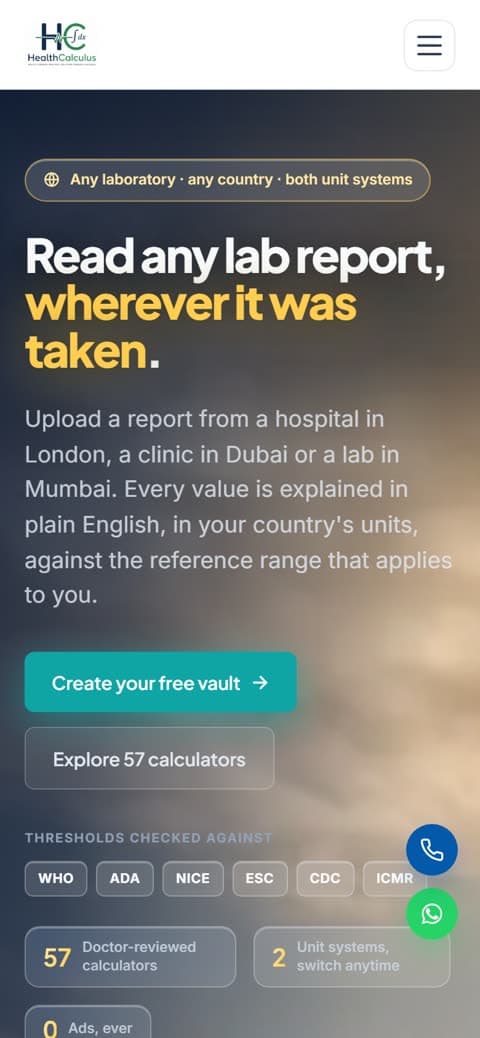
A family health portal that reads lab reports in plain language
We also build and run four platforms for our own group, Pro Lifeset: SureshotVisa, Lifeset Overseas, CAIPS Notes Apply, SureshotTravel.
Bring examples of the task, the expected answer and the mistakes that would matter most. Data availability and permission to use it affect both feasibility and scope.
Evaluate the system against agreed examples before expanding it. A convincing demonstration is not sufficient evidence that an AI system will handle production work reliably.
A few lines on the form, or ask the assistant. A person replies within 4 business hours.
What to fix first and why, what we'd build and run, the price and the go-live date, in writing within two business days.
A website takes 2 to 6 weeks, a web app 8 to 16. Tested on real phones before launch.
Hosting, updates and the systems kept working. Monthly plans cancel any time.
You own everything.
Your code, your domain, your accounts and your data.
One contract, your currency.
You sign with Redenn Informatics Pvt. Ltd. (India) and are invoiced in your own currency. North American work is led from our Brampton, Ontario office (Redenn Informatics Inc.).
Tested on real phones.
Built mobile-first, load time measured before launch, designed to WCAG 2.1 AA.
Prices published.
Websites from $1,200, web apps from $15,000, monthly systems $149 to $249/mo plus setup from $500, and care from $49/mo.
Quoted and invoiced in your own currency by Redenn Informatics Pvt. Ltd. (India); pay by card through Razorpay or by bank transfer.
Two shapes cover most projects. The first is an AI feature built inside a product you already run, streaming responses by default, rather than a widget bolted on the side. The second is back-office automation: the manual reading, sorting, drafting and re-keying that quietly eats staff hours. In both cases the work opens with a scoping workshop that maps your workflows to automation candidates, ranked by value and risk, so the first thing we build is the one with the clearest payoff, not the flashiest demo. Models are chosen for the job, Claude and GPT families via API, with open-weight models where data residency or unit economics demand it.
With engineering before and after launch. Before: candidate models are benchmarked on your actual task with cost and latency budgets, and an evaluation set is built from your real data, with pass or fail criteria agreed before go-live, so quality is measured rather than assumed. After: every request is logged, costed and reviewable, with token-level cost accounting surfaced in your admin dashboard, and monitoring continues once the system is live. And where a mistake would genuinely hurt, we build a human-review loop in which the AI drafts and your team approves, so nothing in those workflows reaches a customer until a person has cleared it.
The honest ranges on this page: an AI feature inside an existing product typically runs 3 to 6 weeks, and back-office automation typically runs 4 to 8 weeks, depending on how many systems the automation has to touch. Those ranges include evaluation before launch, not just the build itself, because a model that has never been tested against your real data is not finished. Scope is agreed in writing before work starts, so the range you are given at proposal stage is the range the project is planned around, and anything that would change it is discussed with you first, not discovered on an invoice.
A person replies within 4 business hours. Your written growth plan follows within two business days.
Or call +1 437 524 3001 or toll-free +1 888 905 4003, or email hello@redenn.com.