



TruckNonStop
Tools that tell owner-operators whether a load actually pays
Get time back · AI that does the work
Language-model features built like production software: grounded, tested and watched for cost.
Your clinic, after hours
AI assistant · 10:42 PM
LLM features built like production software: RAG pipelines, multi-provider model routing, structured output, and evals in CI that gate every prompt change.
Every company has seen the same demo by now. Someone pastes an API key into a prototype, wires a chat box to a frontier model, and the room applauds. Six weeks later the same feature is in production and it's a different story: answers drifting from the source material, a monthly token bill nobody budgeted, latency spikes whenever the provider has a bad day, and no way to tell whether last Tuesday's prompt tweak made anything better or worse.
The gap between the demo and the product is engineering. That's the part we do.
Evals before vibes. Every prompt, retrieval setting, and model choice is scored against an eval set built from your real inputs. Changes run through that suite in CI like any other regression test. "It feels smarter" is not a merge criterion.
Token cost and latency are performance budgets. Same discipline we apply to load time on our web builds. Each feature gets a cost-per-request and a p95 latency target before code starts. Model routing does most of the work: a small, cheap model handles the easy majority of calls, and a frontier model handles the ones that actually need it. Caching and prompt design cover much of the rest.
Structured output, not chat wrappers. Most useful LLM features never show a chat bubble. The model's job is to return typed, schema-validated JSON — extract, classify, route, draft — that your existing code can trust. Validation failures retry or fall back deterministically instead of leaking garbage into your database.
If the feature needs a product around it — auth, dashboards, review queues, billing — that's our home turf: see /services/webapps.
Two common engagement shapes:
A grounded assistant over your own content. Documentation, help-centre articles, policies, or a product catalogue goes through a RAG pipeline; the assistant answers with citations back to source, admits when it doesn't know, and escalates to a human. The eval set is built from real questions your team has already answered — so "correct" is defined by you, not by us.
A document-processing pipeline. Unstructured inbound material (applications, invoices, emails, PDFs) gets extracted into typed records with confidence scores. High-confidence rows flow straight into your database; low-confidence rows land in a human review queue. A cheap model does the first pass, and the frontier model is called only where confidence is low.
LLM work is scoped to the project. The cost depends on your data, your integrations, and how deep the eval and guardrail work needs to go — pretending otherwise with a tier table would be dishonest. Contact us with a paragraph on what you're trying to build and we'll come back with a scoped, fixed-price quote. Ongoing model upgrades and eval upkeep can ride on a Care Plan afterwards.
Tools that tell owner-operators whether a load actually pays
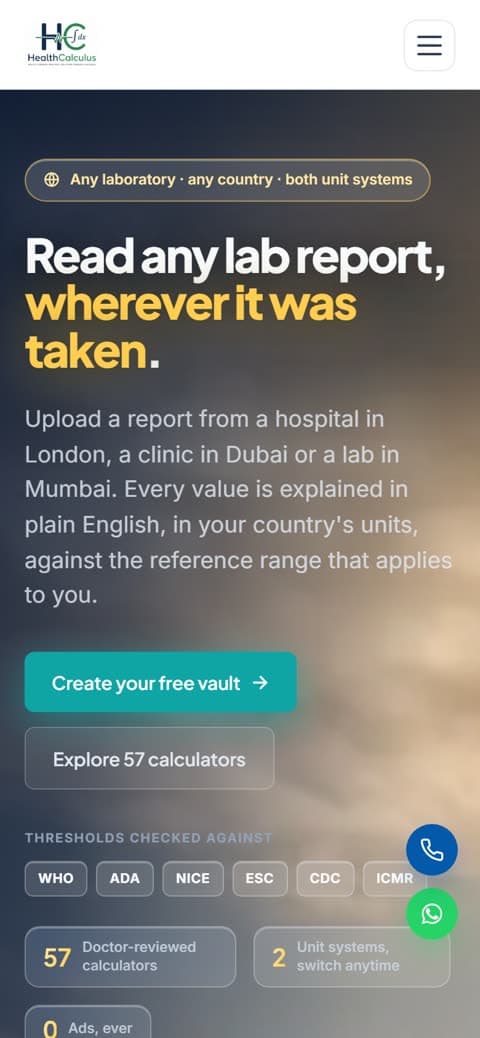
A family health portal that reads lab reports in plain language
We also build and run four platforms for our own group, Pro Lifeset: SureshotVisa, Lifeset Overseas, CAIPS Notes Apply, SureshotTravel.
Share sample questions, approved sources and access rules. Clarify freshness requirements and whether the system needs to answer, extract information or take an action.
Review grounded answers and failure cases separately. More fluent language should not be mistaken for more reliable information.
A few lines on the form, or ask the assistant. A person replies within 4 business hours.
What to fix first and why, what we'd build and run, the price and the go-live date, in writing within two business days.
A website takes 2 to 6 weeks, a web app 8 to 16. Tested on real phones before launch.
Hosting, updates and the systems kept working. Monthly plans cancel any time.
You own everything.
Your code, your domain, your accounts and your data.
One contract, your currency.
You sign with Redenn Informatics Pvt. Ltd. (India) and are invoiced in your own currency. North American work is led from our Brampton, Ontario office (Redenn Informatics Inc.).
Tested on real phones.
Built mobile-first, load time measured before launch, designed to WCAG 2.1 AA.
Prices published.
Websites from $1,200, web apps from $15,000, monthly systems $149 to $249/mo plus setup from $500, and care from $49/mo.
Quoted and invoiced in your own currency by Redenn Informatics Pvt. Ltd. (India); pay by card through Razorpay or by bank transfer.
Every LLM build is quoted as a fixed price after scoping, and the cost depends on your data, your integrations, and how deep the evaluation work needs to go. A grounded assistant answering questions over a clean help centre is a smaller build than a document-processing pipeline that turns unstructured files into typed records with confidence scores. It's also worth separating the build cost from the running cost — we instrument latency and token spend per feature, with budgets, dashboards and alerts, so the monthly API bill is visible and controlled from day one instead of arriving as a surprise.
Almost certainly not, and it would rarely be worth the money. We build on models from Anthropic and OpenAI, plus open-weight models where they fit, behind a routing layer with provider fallbacks — so your feature isn't married to one vendor and keeps working if a provider has a bad day. The intelligence that's specific to your business comes from retrieval, not training: your documents, policies and product data are stored in Postgres with pgvector, in your own database, and fed to the model with citations. You get answers grounded in your content without the cost of owning a model.
Two ways: grounding and testing. The retrieval pipeline — chunking strategy, embeddings, hybrid vector and keyword search, reranking — feeds the model your actual content, and answers cite their sources so users can check them. Then an eval suite built from your real historical inputs runs in CI as a regression gate, meaning a prompt or model change that would make answers worse fails the build before any customer sees it. And for cases where the system genuinely isn't sure, guardrails include graceful refusal and escalation paths, so the assistant hands off to a human instead of bluffing.
A person replies within 4 business hours. Your written growth plan follows within two business days.
Or call +1 437 524 3001 or toll-free +1 888 905 4003, or email hello@redenn.com.