Case studies

The hard problems — and how we cracked them.

Three flagship builds, in depth. Not glossy thumbnails — the real story behind each project: what the client needed, the wall we hit, and exactly how we got through it.

What you are actually looking at

Most agency case studies are expanded thumbnails — a screenshot, a sentence, an invented statistic. Ours are not. Each of the three below is a genuine, qualitative account of a real engagement: the brief as the client framed it, the specific technical or design wall that made the project hard, and the decisions we made to get past it.

You will not find a fabricated “99% success rate” or a made-up traffic multiple here. Where a hard metric belongs, it is the client's to publish — so we have kept these write-ups honest and qualitative on purpose. What they show instead is how Redenn thinks: how we turn a vague brief into a content model that scales, how we decide what is a webapp problem and what is a brochure problem, and why we publish prices when the rest of an industry hides them.

These three were chosen because they are our strongest and because we control the full story on each. Every other project we have shipped lives in the work archive, filterable by category, industry and country. The full write-up for each flagship lives on its project page — this page is the way in.

Flagship 01Immigration & visa consultancy · Patiala, India

SureshotVisa

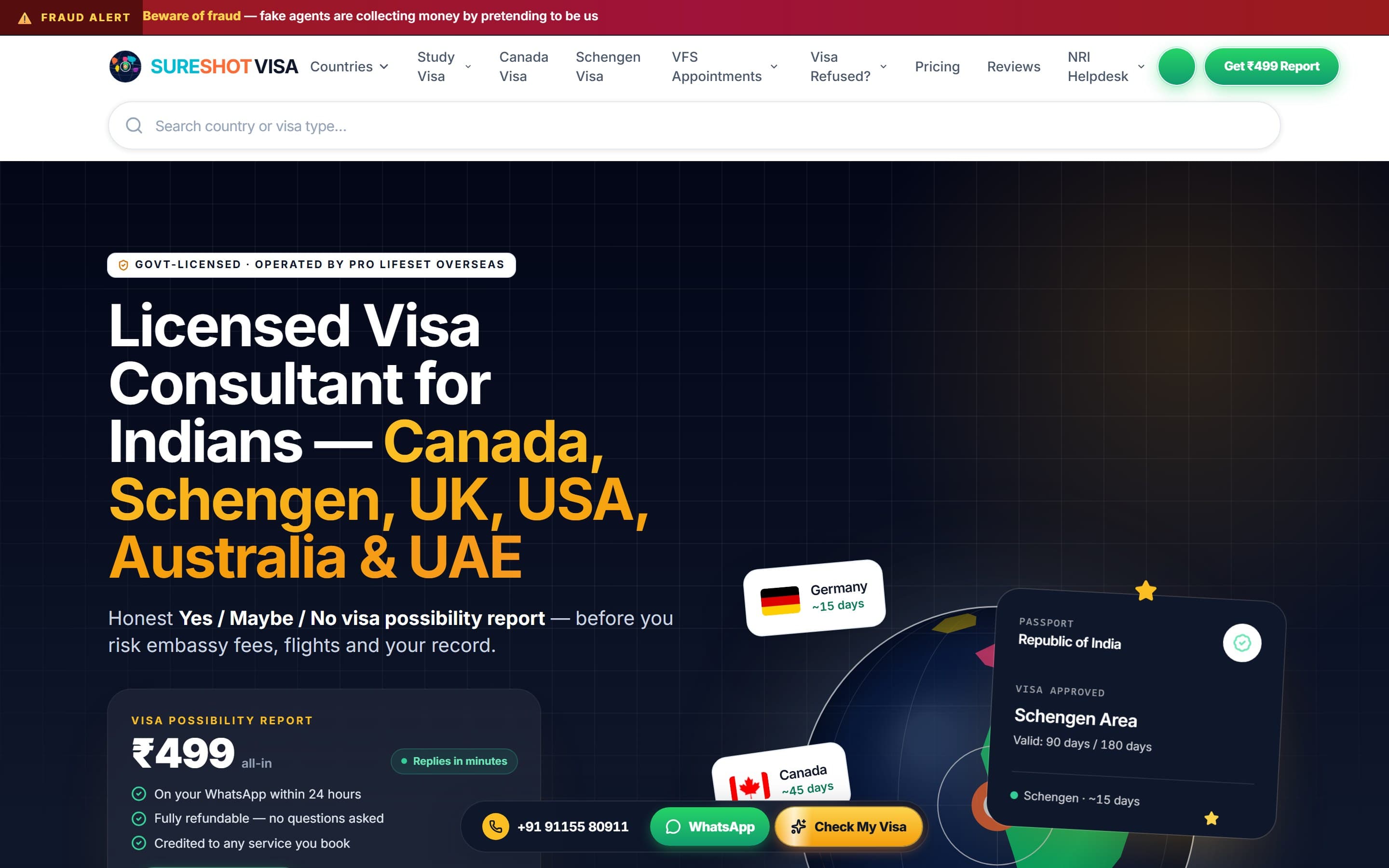
A government-licensed visa consultancy, rebuilt as a webapp that does real work.

The brief
SureshotVisa already ran a working, properly licensed consultancy. What it did not have was a website that could carry the weight of the business. Most visa-consultancy sites are brochures — a hero image, a grid of flags, a phone number. SureshotVisa needed the opposite: a site that qualified traffic, was honest about money, and supported the full lifecycle of an application.
What made it hard
The hard part of a visa platform is breadth. SureshotVisa actively files for more than ten destinations and quotes for fifty more — each with its own fees, checklists and processing reality. A naive build means sixty hand-maintained pages that drift out of date the moment an embassy changes a fee. On top of that, a licensed consultancy is legally accountable for every claim it makes, so none of the invented “99% success rate” banners that fill this market were available to us.
How we cracked it
We treated SureshotVisa as an application with content, not a content site with a form bolted on. Four interactive tools form its spine — an eligibility quiz, a visa fee calculator, an encrypted document portal and a rejection-analysis tool — each genuinely useful and each a doorway to a booked consultation. Country content is data-driven: one structured record per destination, rendered by shared templates, so a fee change is a data edit rather than a site-wide hunt.
Next.js · React · TypeScript · Tailwind CSS · VercelRead the full case study
Flagship 02Immigration consultancy · Patiala, India

Lifeset Overseas

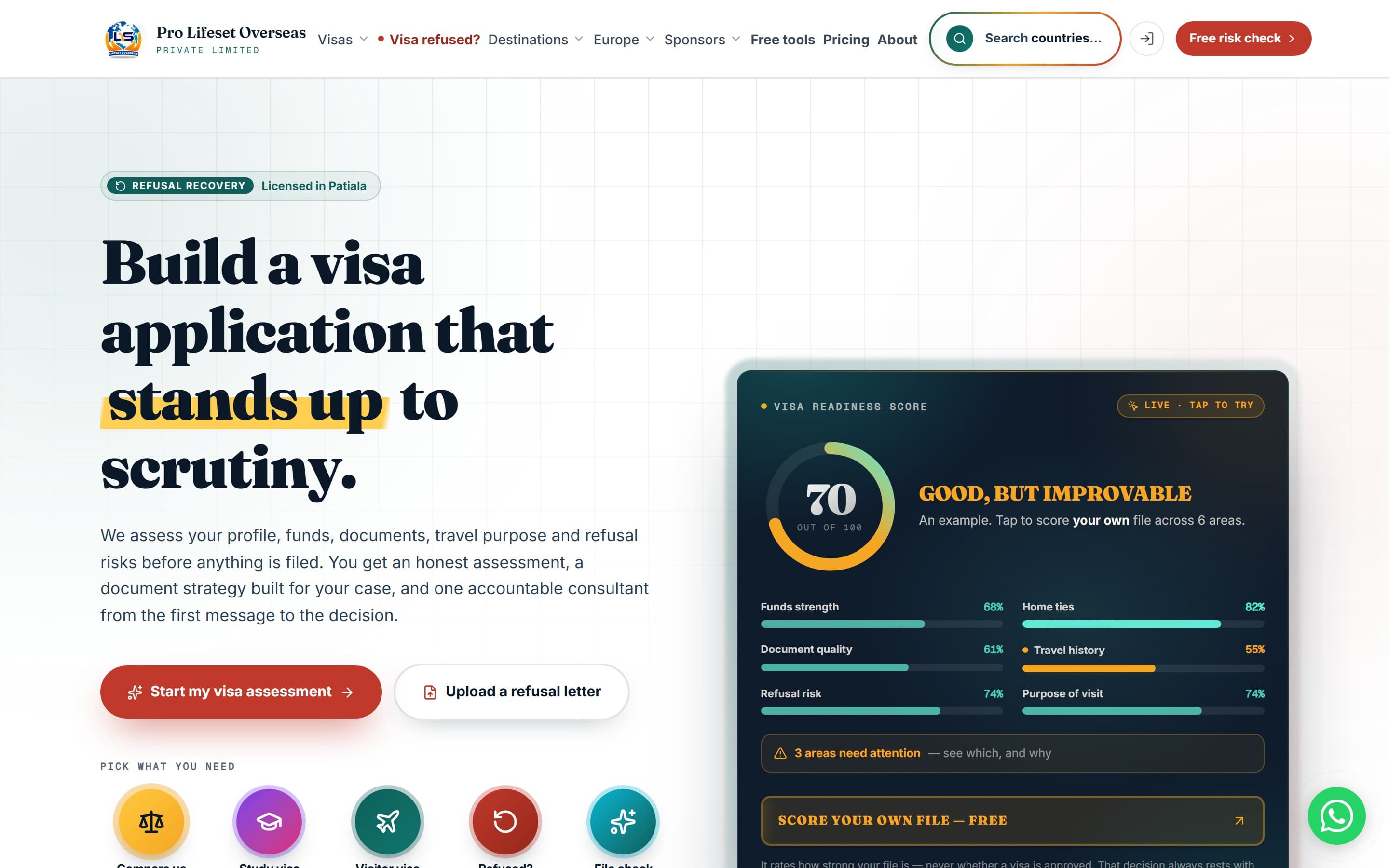
A marketing site an anxious applicant can trust — and a portal the consultants can run a caseload on.

The brief
The brief was not “build us a website.” It was “build us something an anxious applicant can trust, and that our consultants can actually run a caseload on.” Immigration is a high-anxiety, high-stakes purchase, often made after a previous refusal. Lifeset's positioning rests on accountability: a real licence, fixed fees with no hidden add-ons, and one consultant per case from first call to final decision.
What made it hard
Two audiences had to be served by one site. Prospective clients needed a marketing surface that converted nervous first-time visitors. Existing clients needed somewhere to do the actual work — upload documents, track case status, message their consultant — without it collapsing into a chaos of messaging threads and lost email attachments. WordPress alone could market the practice, but it could not run a caseload.
How we cracked it
We built a WordPress marketing site so non-technical staff could keep the resource library growing, then bolted a custom PHP client portal onto the same site. The portal is organised around one idea: one client, one case, one consultant, one place. Documents live in the case record, status is visible to the client at all times, and messaging is threaded against the case — software that mirrors Lifeset's one-consultant promise.
WordPress · PHP · custom client portalRead the full case study
Flagship 03Construction — residential framing · Manitoba & Ontario, Canada

Empire Framing Inc.

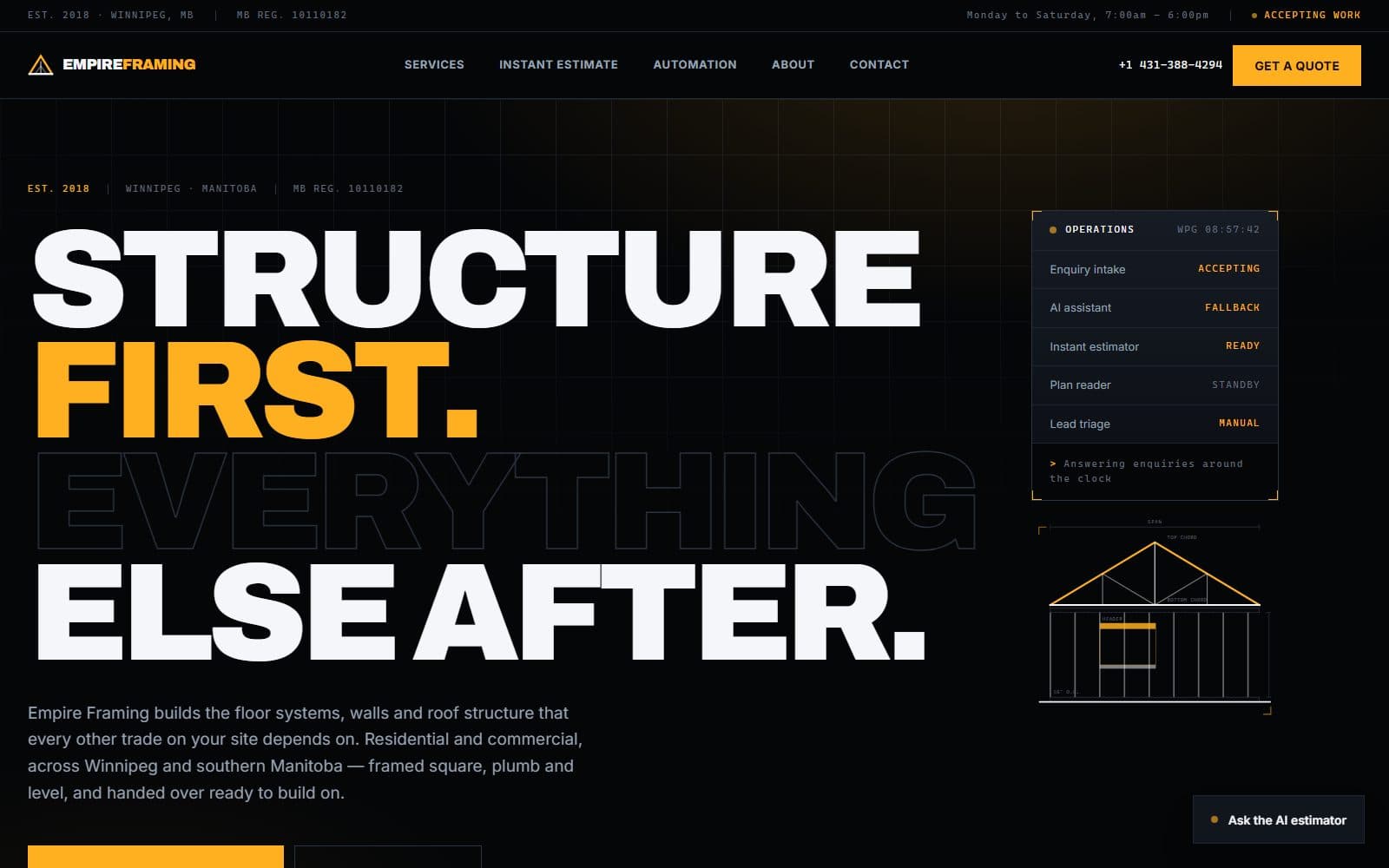
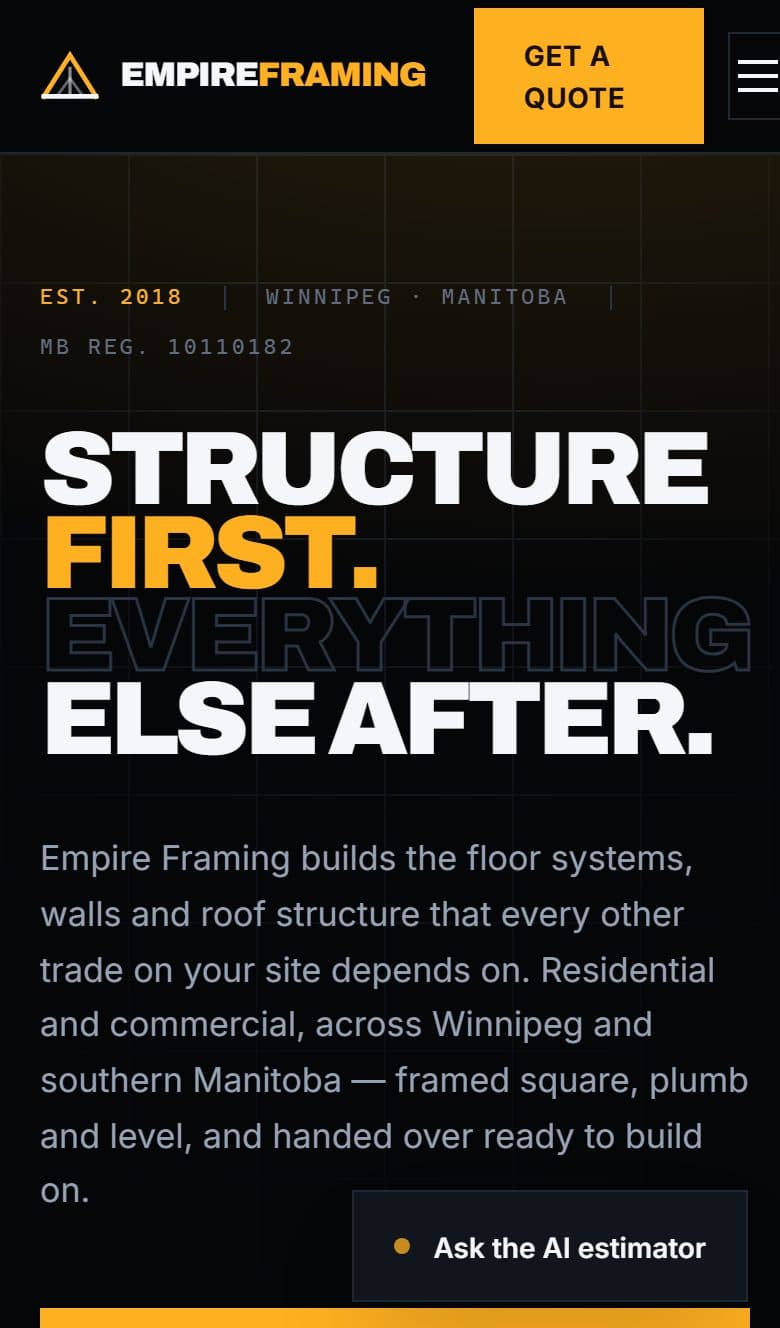
A 25-year framing contractor's site, built around the quote and built for the phone.

The brief
Framing is a trade business, and trade businesses are won and lost on trust, clarity and a fast quote. Empire's site had to sell a high-value construction service to two very different buyers — the individual homeowner commissioning a custom build, and the developer running a subdivision — without confusing either, and it had to work first on a phone, because that is where this audience lives.
What made it hard
Most contractor websites are an afterthought: a logo, a stock photo, a phone number. Empire does not do one thing — it does custom-home framing, subdivision framing, steel and metal framing, site supervision and hourly work. A visitor needs to see that range without drowning in it, and a framing quote is only as good as the information behind it.
How we cracked it
We organised the build around the quote request, splitting “how to ask for a quote” from “ask for a quote” so the field office receives requests it can act on. Each service got its own page pitched at the buyer it is for, and Empire's real starting prices were published in the open — a deliberate, slightly uncomfortable decision that lets a homeowner self-qualify before they ever call.
WordPress · Elementor · PHPRead the full case study

Want to see everything else?

The full portfolio — websites, ecommerce and webapps — filterable by category, industry and country.

Browse the work archive

Your project next

Got a hard problem? That’s our favourite kind.